Small Things Like These
The text this website will focus on is Small Things Like These by Claire Keegan. This novella follows Bill Furlong during the busiest season of his work as a coal merchant and father. Bill becomes suspicious of the local convent as the young girls working there often look unkempt and miserable. During a morning delivery to the convent, Bill discovers a young girl locked in the coal shed. Mother Superior, the leader of the convent, makes sure to label it as an accident that the girl was left in the coal shed. Bill returns to the convent to find the same girl locked in the coal shed, but this time he rescues her. This novella highlights how the disregard of injustices and silence inside a community can allow these injustices to continue without any repercussion. This theme is not specific to this novella as the horrors explained in the story are based on true stories of the Magdalene Laundries that were able to run in Ireland for 200 years because of community complicity. The novella was published in 2021, close to the time that the Irish government published its findings (2013) and announced they are giving compensation for survivors of the Magdalene Laundries. The novella won various prestigious awards and was turned into a major motion picture. This novella brings light to the horrors of Ireland’s Magdalene Laundries and how one small act of kindness can greatly help someone in an astonishing and beautiful way.

The Magdalene Laundries
The first Magdalene laundry in Ireland was opened in Dublin in 1765. They were originally known as short-term refuges for “fallen women”, but this was a deceiving description of the horrors that the laundries encapsulated. They targeted women isolated from society: unmarried mothers, abused women, homeless women, and women with learning disabilities. They promised these women a sanctuary, but delivered exactly the opposite. The women taken in by Magdalene laundries were forced to work jobs relating to laundry without being paid.

The map above shows the locations of Magdalene laundries and burial sites that have been found in Ireland thus far. The green markers are the laundries and the red markers are the burial sites.
Recent Excavation in Galway
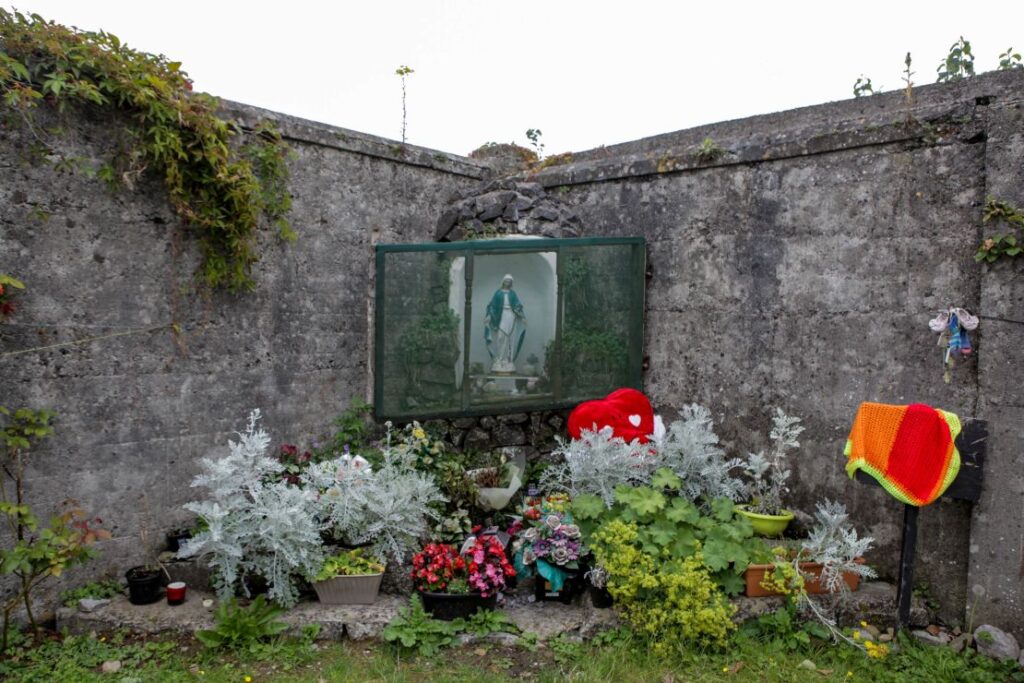
An excavation of one Magdalene laundry in County Galway in July 2025 unearthed the remains of 796 babies and toddlers found in a septic tank behind the facility (Frayer). This specific laundry only ran from the 1920s to the 1960s. Unmarried mothers would come into these homes to give birth, but would never leave with their children. Some children were sent into foster care, but most children born in Magdalene laundries would go missing. Several decades after this specific laundry closed, the bodies of the missing children are finally found. This is just one of the many mass graves connected to former Magdalene laundries that are yet to be uncovered in Ireland.
Survivor Stories:
Maureen Sullivan’s story:
“Maureen Sullivan’s mother remarried after her father died and Maureen claims she was abused by her stepfather. The nuns noticed, called in a priest and convinced her mother that Maureen would be going to a ‘lovely school’.
She said she never saw her school books again, was forced to work night and day, seven days a week, and was given a new name, Frances.
‘What an evil thing to do. I never did any wrong. I was an innocent child and a nun told me I could trust her to tell her my story. I trusted her and what a fool I was. I mean when you look back now,’ she said.
‘You were brought up then to think you could trust a nun or a priest but they did a lot of wrong by me and very many other people.’
Ms Sullivan said her day began at six in the morning, and finished at nine at night.
She would have to scrub and polish floors, work in the laundry and then make rosary beads and knit Aran sweaters.
‘Everything was taken from me; my name, my rights as a child to go out and play with other children, my rights to communicate with other people,’ she adds” (“Magdalene Laundries: Survivor stories”).
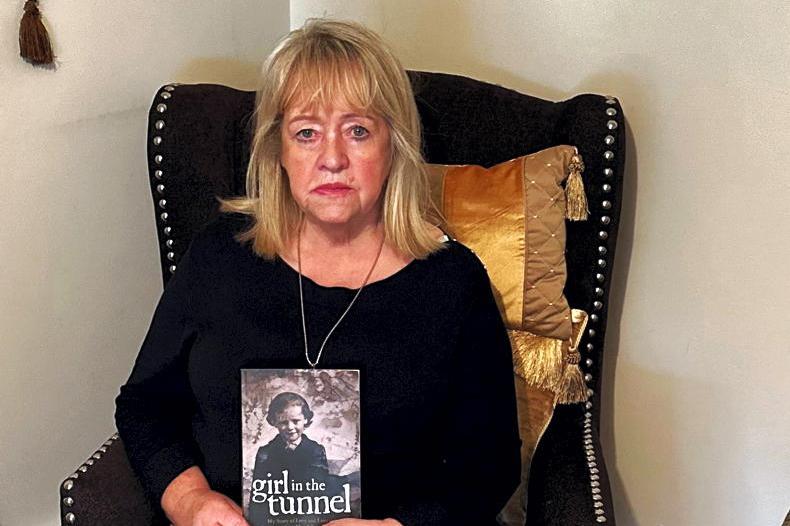
Maureen has published a book about her experience in the Magdalene laundries. She is now an advocate for survivors.
The Power of Deception
After reading many survivor stories, it is apparent that the power of deception was essential to the continuation of the Magdalene laundries. Many young women were tricked into willingly staying at the laundries because they were promised education and a nice place to stay for a short period of time. This was not the reality that they faced inside these homes. Many survivors say that they trusted the nuns and priests, but were horribly deceived by them. The laundries also misled the communities they resided in to believe that they were committing only kind acts by taking in ‘fallen women’. As women who escaped the laundries commonly had no education or communication skills after their incarceration, they did not seek to report the horrors that they endured. Ireland has recently investigated the Magdalene laundry regime and published their findings. The president of Ireland also gave a formal apology and compensation to the survivors. This public address of the Magdalene laundries has encouraged more survivors to share their stories.
Connection to Small Things Like These
Understanding the historical background of the Magdalene laundries exposes the degree of cruelty behind the mysterious convent in the novella. Without knowing the full history of the laundries and the serious and sometimes fatal mistreatment that went on inside them, the reader could view the convent as a single isolated home that neglects the girls that live there or harshly punish them when they do wrong. When readers understand the history of the laundries, they understand that the convent is a representation of thousands of laundries all over Ireland that imprisoned young girls and forced them to work, took their babies from them, starved them, and abused them. In the novella, a young girl imprisoned at the convent says to Bill, “‘I’ve nobody- and all I want to do is drown meself’” (Keegan 44). Without historical context of the situation, readers could think the girl is being a little dramatic and simply wants to leave the convent. Knowing the historical context, this girl was not being dramatic and her last resort was a reality for many of the girls in the laundries. Thousands of women died in the laundries from illness, attempts to escape, and suicide (King). Women all over Ireland were suffering in similar ways to her and never got the chance to cry for help, so they resorted to attempting to escape and in some cases suicide. Another aspect of the novella that understanding the history reveals is the true courage of Bill’s “small” act. Bill finds Sarah in the coal shed and tells her, “‘You’ll come with me now, Sarah’” (Keegan 220). His act easily saved Sarah’s life and gave hope for other girls in the convent that they may escape one day as well. Over the hundreds of years that the laundries were running, few people ever rescued the victims. This is due to the secrecy of the events going on in the laundries and the power that the Catholic church had over Ireland. Bill went against the church by taking Sarah which could result in bad repercussions for him and his family. Despite this, he decided that saving Sarah’s life was more important than the possible repercussions. This reveals his true kindness and bravery to do the right thing in a time when turning a blind eye to the laundries was extremely common and encouraged.
Works Cited
Blakemore, Erin. “How Ireland Turned ‘Fallen Women’ Into Slaves.” HISTORY, 12 Mar. 2018, History.com, www.history.com/articles/magdalene-laundry-ireland-asylum-abuse. Accessed 9 Dec. 2025.
“BOOK REVIEW: Small Things Like These by Claire Keegan.” Emma’s Biblio Treasures, 11 Dec. 2024, emmasbibliotreasures.com/2024/12/11/book-review-small-things-like-these-by-claire-keegan/. Accessed 9 Dec. 2025.
Daunt, Rebekah. “‘Chamber of horrors’: Remains of hundreds of babies to be exhumed from mass grave in Ireland.” Euronews, 03 July 2023, www.euronews.com/2023/07/04/chamber-of-horrors-remains-of-hundreds-of-babies-to-be-exhumed-from-mass-grave-in-ireland. Accessed 9 Dec. 2025.
“Excavation of Mass Grave Begins at a Notorious Home for Unwed Mothers in Ireland.” NPR, 14 July 2025, www.npr.org/2025/07/14/nx-s1-5440105/excavation-of-mass-grave-begins-at-a-notorious-home-for-unwed-mothers-in-ireland. Accessed 9 Dec. 2025.
King, Harriet. “The Magdalene Laundries: Psychological trauma of Ireland’s religious institutions.” The IPF, 23 June 2016, the-ipf.com/2016/06/23/magdalene-laundries-ireland-trauma/. Accessed 9 Dec. 2025.
“Magdalene Laundries Victim Mary Cavner to Get Compensation.” BBC News, 21 Aug. 2019, www.bbc.co.uk/news/uk-england-hampshire-49393418. Accessed 9 Dec. 2025.
“Map of Magdalene Laundries & Graves – Justice for Magdalenes Research.“ JFMResearch.com, jfmresearch.com/home/map-of-magdalene-laundries-and-grave-locations/. Accessed 9 Dec. 2025.
Ostberg, René. “The Tragic Testimony of the Daughters of Magdalene.” Sojourners, January 2023, sojo.net/magazine/january-2023/tragic-testimony-daughters-magdalene. Accessed 9 Dec. 2025.