understanding “Once Upon a Time” in cultural context
Learning about the violence used to uphold the apartheid in South Africa, in instances like the Soweto Uprising of 1976, allows us to understand the perspective offered to us by Nadine Gordimer in “Once Upon A Time.” Violence reached extreme lengths in South Africa during the time of apartheid and our text highlights the division and mindset of white Afrikaners which upheld the apartheid. As readers, this helps us analyze the “perfection” of the white suburban family and the fear which forced them to incorporate defense mechanisms.

These mechanisms ultimately led to the horrific conclusion in which the young boy is directly injured by a product of segregational fear- razor wire. We see the razor wire installed on page 72, “A gang of workmen came and stretched the razor bladed coils all round the walls of the house where the husband and wife and little boy and pet dog and cat were living happily ever after. The sunlight flashed and slashed, off the serrations, the cornice of razor thorns encircled the home, shining” (Gordimer 72).
This quote demonstrates the appearance of perfection in the family’s suburban home that is realistically built on discriminatory, racist dogma that is represented by the presence of razor wire around the family’s home. The wire is depicted as shining and resistant to rust in the story, showing that the prejudiced mindset of the apartheid is resistant to change and hard to overcome. The mindset was engrained into the lives of white minority citizens by the National Party government, making racist ideals and inequality a part of their legislation, schools, and workplace.
The family’s perfect appearance ultimately disappears with the horrible injuries of the son at the conclusion of the story, illustrating the infliction of pain that apartheid ideology causes for not only the oppressed, like in the Soweto Uprising, but also for the oppressor.
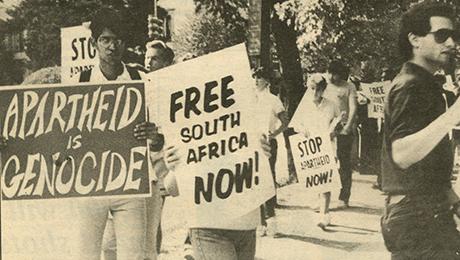
The Soweto Uprising, a massacre of peacefully protesting school children, was the result of apartheid legislation which twisted events into racist propaganda. Riots and protests were used to create a negative connotation of black South Africans that were fighting against oppression. This propaganda enforced mindsets of fear and discrimination in white South Africans, creating greater separation and prejudice towards the black majority. The black population was illustrated as something to be feared, but the white minority government and police force was seen as something to be trusted for protection and safety. This is the central mindset of the family in “Once Upon A Time.”
Gordimer tells us the worries of the wife and reassurances of the husband on page 69. She says, “Yet she was afraid that some day such people might come up the street and tear off the plaque YOU HAVE BEEN WARNED and open the gates and stream in… Nonsense, my dear, said the husband, there are police and soldiers and tear-gas and guns to keep them away” (Gordimer 69). Gordimer explicitly demonstrates the wife’s fear of the black South African majority as well as the husband’s assurance from police “protection,” or rather, violence towards the opposite skin color. This is a plain representation of the manifestation of propaganda in white families in South Africa. The tear-gas and guns referenced are also the main weapons used to control protesters in the Soweto Uprising, a parallel that becomes clear with an understanding of the Uprising.
Having background knowledge of the Soweto Uprising allows readers to make these connections and easily recognize the cultural climate of the story’s setting in South Africa.
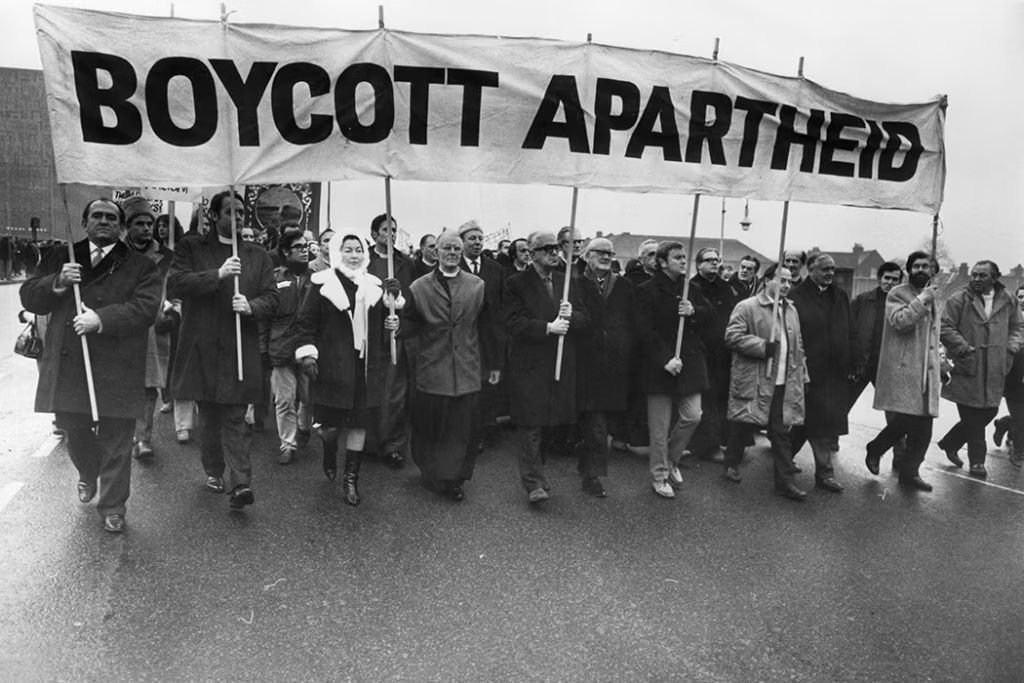
South African apartheid ended in 1994, but its effects still linger today. It is just as important to read stories such as “Once Upon A Time” and learn about events such as the Soweto Uprising in 2025 as it was in the 1980s during the midst of apartheid. The reality of racial discrimination and prejudice is still present in South Africa now- even 31 years since the country became fully democratic. Nadine Gordimer and other activists provide a perspective that we should strive to understand in order to change the social implications of apartheid in modern South Africa in 2025.