As the family in “Once Upon A Time” begins to border up their home, we see the husband of the family deciding to establish gates to keep his family happy and “safe” from the riots, shootings, and protests that surrounded their suburban neighborhood.
But to please her – for he loved her very much and buses were being burned, cars stoned, and schoolchildren shot by the police in those quarters out of sight and hearing of the suburb – he had electronically-controlled gates fitted.”
Nadine Gordimer, “Once Upon a Time”
Specifically, the reference to “schoolchildren shot by the police” truly affected me. What was Gordimer referencing here?
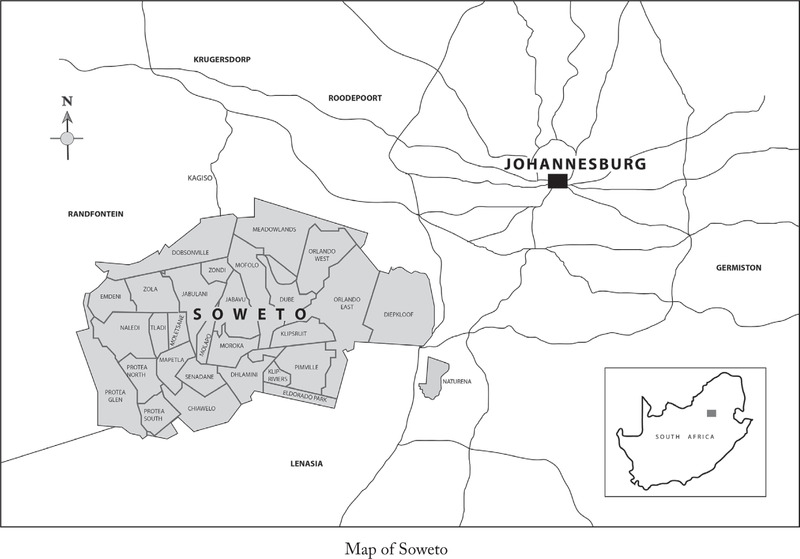
This reference here was to the Soweto Uprising of 1976. The Soweto Uprising was a result of the South African Apartheid that segregated black South Africans from white South Africans. The apartheid was enforced by the Nationalist Party that came into power in 1948 in order to maintain white minority rule over the black majority in South Africa. Under the apartheid, segregation was lawfully enforced; this included segregation in public facilities, housing, health care, education, and employment opportunities. Because of this, the black majority was forced into “homelands” that separated them from white communities such as the white suburban neighborhood in “Once Upon A Time.” Blacks were denied all legal autonomy to change this, with no legal representation or right to vote.

A major aspect of segregation included black South Africans being placed under Bantu Education in 1953. Bantu Education was an intentionally inferior education system which only prepared students to fulfill labor and servant roles in the workforce under white Africans. Prior to this act in 1953, educational opportunities were still scarce under apartheid laws but continued to worsen under Bantu Education. Black children were mandated to attend their homeland’s assigned school where there was overcrowding, inadequate funding, and poorly qualified teachers. Later in 1974, the government insisted that the language Afrikaans be taught in equal parts with English.
Afrikaans is a germanic language that evolved through Dutch speaking European colonists in the Cape of Good Hope, South Africa. This language was mostly spoken by the white minority in government. The implementation of the Afrikaans requirement sparked outrage and symbolized further oppression of black South African children.
A piece of apartheid propaganda in favor of the Bantu Education Act of 1953.
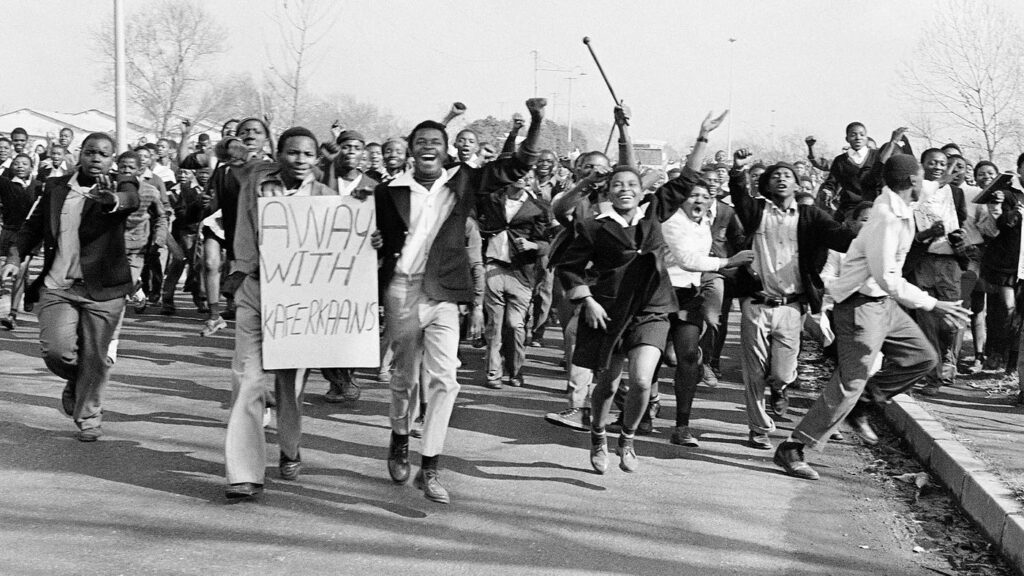
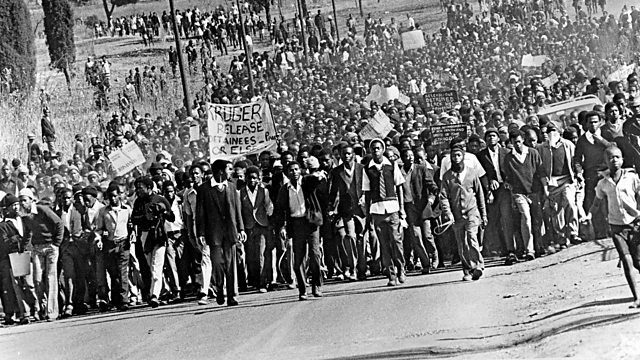
This was the immediate cause for high schoolers in Soweto to peacefully protest the implementation of Afrikaans and Bantu education. Students organized protests through clubs and associations such as the South African Students Movement (SASM) and Soweto Student Representative Counsel (SSRC). Students in the SSRC and across multiple high schools planned to march the morning of June 16, 1976. Around up to 10,000 school-aged children marched peacefully that morning.
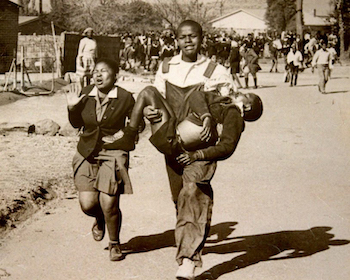
The protest began peacefully, with student leaders enforcing organization and order. However, within a few hours, police began to use teargas on the large crowds. In the confusion of teargas, one single gunshot from a policeman was sounded. This resulted in chaos and further open fire on the crowds. The large crowd of protestors fled and began to retaliate throughout the area. Fires were started and police brought armored vehicles into the streets to deal with the crowds. The protest turned to revolt and spread throughout the country in the following two days (June 17-18th) with heightened hostility from both protesters and policemen.
By the end of the Uprising, more than 600 black South Africans were shot and killed, most of which were school-aged children. In the whole country, the numbers may have reached several thousands.
TW: GRAPHIC CONTENT– A short clip from “Cry Freedom” (1987) that depicts the Soweto Uprising.
The Soweto Uprising of June 16-18th attracted great amounts of national coverage, sparking increased support for anti-apartheid movements. Protests and demonstrations continued across the world until efforts brought the end of apartheid in 1994 with the establishment of a democratic government. The bravery of high school students in Soweto, South Africa provoked an outstanding amount of support from college students in the U.S. to activists like Nadine Gordimer, who sought to reform the unjust system of apartheid.
