Magdalene Laundries & Small Things Like These
Introduction
Small Things Like These is a novella written by Claire Keegan that follows a protagonist named Bill Furlong, who is a coal merchant in a small town in Ireland. Bill was born to a single mother, Sarah, whom he lived with in Mrs. Wilson’s home. Mrs. Wilson was Sarah’s employer and her decision to take Bill in and take care of him impacted his view on the world later in life. Bill has five daughters and a wife, Eileen, to take care of which means he has to work very hard at his job to make enough money to pay for things. He is well-respected throughout the town because of this hard work, as well as the fact that he provides the coal that keeps the town running. Religion is a community matter in this small town, and community members worship at the local convent run by the Good Shepherd nuns despite circulating, harrowing rumors that girls who live there are severely mistreated. One day, Bill delivers an order of coal to the convent and finds girls scrubbing the floors. One of the girls comes up to him and begs for him to help her escape so she can drown herself in the river, however he tells her he cannot help her. He is very distraught by this encounter, and talks to Eileen about the possibility of doing something to help the girls. Eileen quickly tells him that it isn’t their problem and to worry about his own family. Bill ends up going back to the convent again and finds a shivering, malnourished girl in the convent coal shed. The girl is named Sarah, which is coincidentally the same name as Bill’s mother. When he brings the girl inside, he is confronted by the head nun who speaks to him in a condescending tone and offers him hush money in the form of a Christmas card. Bill then thinks about Mrs. Wilson and the fact that his mother could have been stuck working at this convent without her kindness. He then decides to go back to the convent again and rescue Sarah despite the many consequences he will face from it. This decision fulfills his life. The book is heavily regarded as a fantastic book and was nominated for the Booker Prize.
Small Things Like These Accolades

Historical and cultural referent from the text
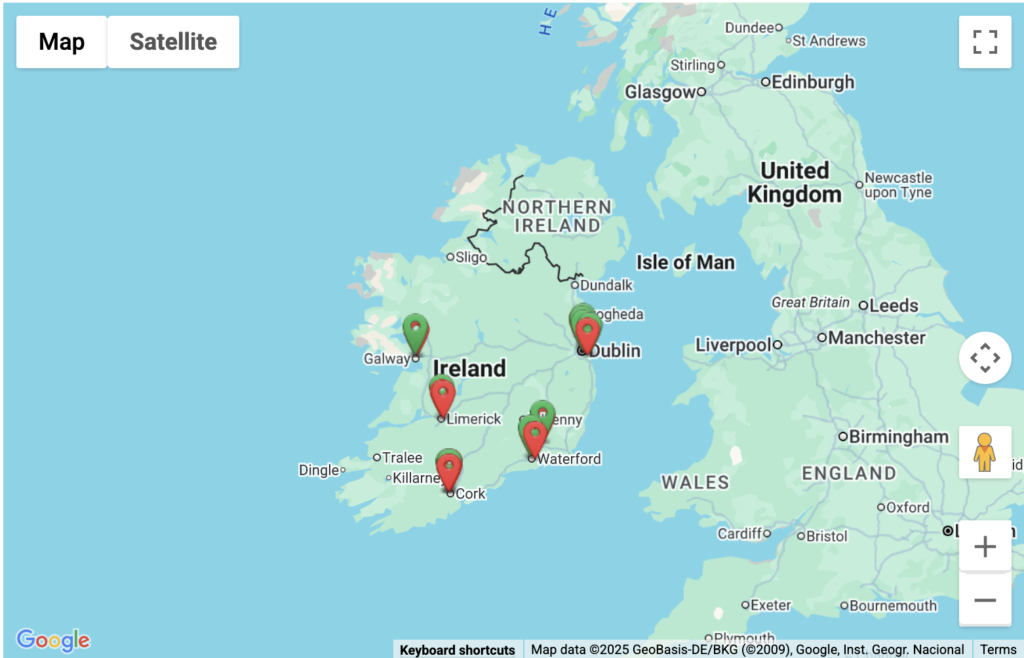
Magdalene laundries were places in Ireland where young girls were regularly abused and forced to live terrible lives of forced labor. These laundries were active for 236 years from 1760 to 1996. Magdalene laundries have impacted significantly more than the ‘official’ number of 10,000 girls given by the Irish government (Justice for Magdalene Research, par. 2). Young girls were forced to do manual labor such as laundry and sewing. The girls were never told about when they would be released, and they were locked behind doors in rooms with windows that could not be reached. Many girls believed that they would die inside of the convents due to the terrible conditions and abuse they took. The laundries were actually recognized as charities, but ran as for-profit businesses using the non-ethical work of the young girls in which they abused. The government ran the laundries along with the convents, however the nuns are the ones that ran them on a daily basis. The damage done to the young girls over time also led to deaths in the laundries. In 1993, the Sisters of Our Lady Charity, sold a plot of land that had a grave on it. 133 bodies were found in this grave despite the convent only having 75 recorded deaths (Brangan, par. 1). The fact that 58 deaths were unaccounted for shows the apatheticness of the nuns at the convent. The nuns knew what they were doing to the girls was wrong, and didn’t want people questioning a large number of deaths. On a visit to Ireland in 2018, Pope Francis “was moved and shocked by his meetings with survivors of abuse” (BBC, par. 1). This visit caused the Pope to realize how much damage the Catholic Church had imposed on the young girls that lived in the Magdalene Laundries. Even more so, “One of the other survivors was speaking to him about industrial schools and mentioned the Magdalene Laundries and the Pope came back and said: ‘What’s a Magdalene Laundry?’ and seemed to have no idea what they were” (BBC, par. 2). The fact that the Pope, who is the head of the Catholic Church, knew nothing about the Magdalene laundries goes to show how little people talked about the abuse going on in front of their faces. Whether he was lying about his knowledge or not, the tendency to look away from the wrongdoings of the laundries was prevalent in Ireland, just as in Small Things Like These. Switching to the religious motivation behind the Magdalene Laundries, we must first look at the reason behind the name. The Magdalene Laundries were named after Saint Mary Magdalene. Early on, Mary Magdalene suffered from the possession of seven demons in which Jesus was able to heal her from them. Mary Magdalene not only witnessed Jesus’ resurrection according to the Bible, but she also stayed with and acknowledged him after. This made her one of Jesus’ closest disciples (Vatican News, par. 1). And in connection with the story of Saint Mary Magdalene, nuns of each laundry took on the role of “saving” the young girls who had sinned in their past just as Jesus had done for the Saint.
Witness Account from a Survivor
How interpretations of Small Things Like These is impacted by research
The naivety of the Pope reflects the decision of the citizens in Bill Furlong’s town to turn a blind eye from how the nuns of the convent treated the young girls. While all the other disciples either denied Jesus or ran away in fear following the resurrection, Mary Magdalene stayed with and acknowledged Jesus. “And not one of them in shoes but going around in black socks and some horrid type of grey-coloured shifts” (Keegan 43). The religious motivation of “saving” the girls is severely hypocritical of how the girls were treated in the convents. Reading the text after knowing the research, readers develop a hatred for this hypocrisy displayed by Sister Carmel and the other nuns in Small Things Like These. Also, when the narrator talks about the rumors swirling the convent they say “But people said lots of things – and a good half of what was said could not be believed” (Keegan 42). After researching, it is now clear why people did not act against the convents. Because the nuns operated in such a respected system of religion within the country of Ireland, people looked past the harm that was rumored to be happening inside the convents. The consequences of speaking against the Catholic Church were critical due to the influence of the Church within Ireland. These included risk of unpopularity with peers and excommunication. Even the Pope denies knowing about any of the wrongdoing during the history of his church. How would one person feel about going against a whole system on their own? It would be near impossible for someone to summon the strength to do this. However, Bill Furlong was able to, which shows his bravery and commitment to his values.